The Global AI Arms Race
Everyone keeps talking about a second dot com boom. AI is running the show. Money is pouring in, billions of dollars this year, roughly ~50 percent more than last year. The game is no longer just about building the smartest model. It is about who controls compute, who can hire the best people, and who can build rules that protect their moat.
The United States is still on top, producing around 40 percent of the best models. You can see a few cracks though. China is closing the gap and in some tests it is only a few months behind. India’s scrappy teams are finding space in multilingual tools and tight industry use cases.
If you invest, this is not sci fi. It is a moment to shift the portfolio, think where the value chains settle, and pick the platforms and suppliers that will own the demand.
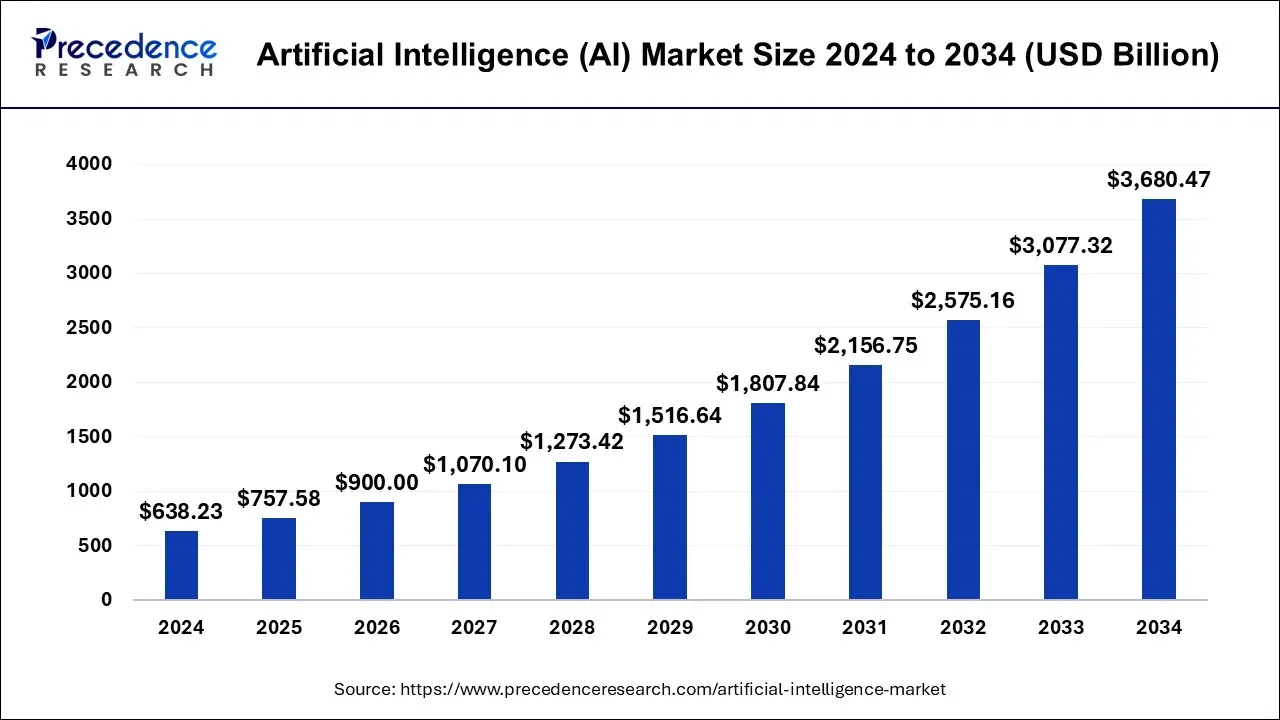
I feel we are very early and I dont believe we are well and truly in Bubble look at below graph , market is expected to be 6X by 2034
The Dragon Awakens – China’s AI Juggernauts
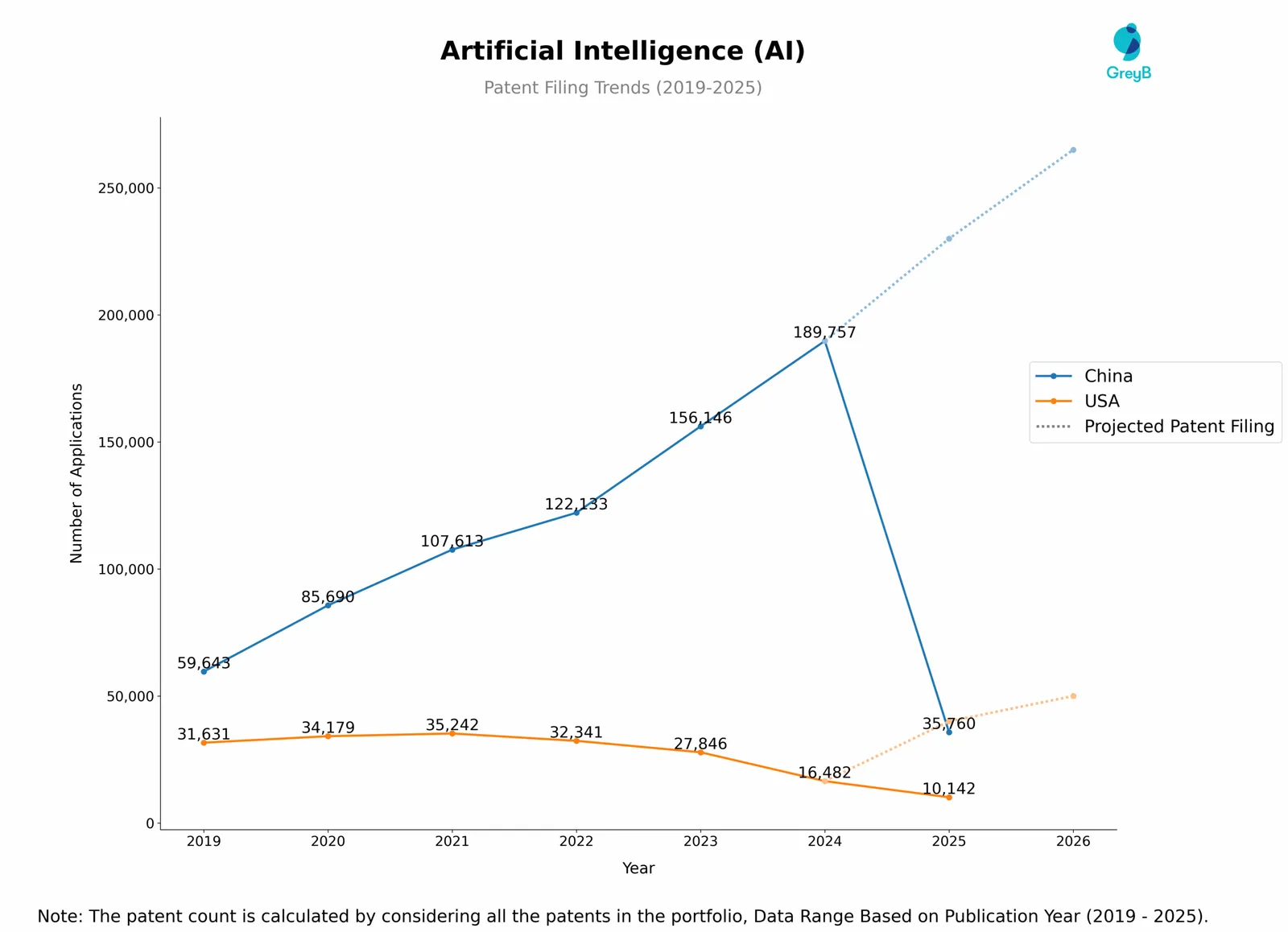
Picture China as a sleeping giant that’s now wide awake and sprinting. Backed by $98 billion in domestic funding and a talent army rivalling Silicon Valley, China’s AI scene is a force of nature. By mid-2025, they’ve cranked out over 38,000 generative AI patents surpassing the U.S. and EU combined and slashed the “reasoning gap” where American models once dominated. For listed stocks, it’s pure rocket fuel: Think the KraneShares CSI China Internet ETF (KWEB) exploding 25% YTD on AI vibes. But who’s really driving this? Let’s zoom in on eight key players shaking the world.
Here’s a cleaner, easier read with no dashes.
Alibaba (BABA, HKEX: 9988)
This is far more than shopping. Qwen 2.5-Max leads multilingual math and coding, trained on about 10 trillion tokens from Taobao scale data. In Q2 2025, AI contributed roughly 15% of cloud revenue to reach RMB 28 billion. Hanguang 825 chips report about 90% of H100 efficiency without U.S. tech. DAMO Academy has hired more than 200 Stanford PhDs and is rolling out agentic AI that can cut logistics costs by about 40%. In non-English markets they look dominant. Qwen’s open models crossed five million downloads last month.
Baidu (BIDU, HKEX: 9888)
China’s search leader is now an AI platform. Ernie 4.5 handles about 200 million daily queries and shows a Mandarin reasoning edge of about 12% on GLUE style tests. Apollo Go has passed 10 million robotaxi rides in Beijing by Q3, with Huawei chips helping at the edge. AI revenue is up about 55% year over year to RMB 4.5 billion. There was an antitrust fine of RMB 1.2 billion in July. Ernie’s sparse architecture is very power efficient and could be a real advantage versus Google.
Tencent (TCEHY, HKEX: 0700)
Hunyuan Turbo is wired into WeChat for 1.5 billion users, lifting ad accuracy by about 25% through multimodal features. A World AI Conference demo of brain-like chips for gaming went viral and Hunyuan-Large video generation drew more than 100 million views. They plan about 24 billion dollars of AI spend. Gaming revenue is up about 18%. Sanctions on partners like SenseTime create some risk. In entertainment AI they are outpacing Meta in mindshare and open weights have sparked more than 2,000 GitHub forks.
SenseTime (0020.HK)
A computer vision pioneer that expanded into foundation models with SenseNova 5.5. Image tasks run about 15% faster than CLIP in their materials. They are pushing into medical AI with more than 500 hospital partners and report a 35% cut in diagnosis time. Q2 revenue reached about HKD 1.8 billion, up 42%. U.S. blacklists cap global reach to around 20%. They remain very strong in surveillance and healthcare, and the ethics debate continues.
iFlytek (002230.SZ)
A speech and language leader now running full stack AI. Spark Desk 3.0 supports more than 100 dialects and powers real-time translation across about 10,000 schools. Edge chips allow offline intelligence on wearables. Revenue rose about 28% year over year to RMB 5.2 billion. They outperform Alexa in non-Latin languages in many demos, although export limits slow device expansion.
Cambricon Technologies (688256.SS)
Often called a local Nvidia. The MLU290 targets A100 class sparse training with roughly 40% lower power. The stock jumped about 60% after Q1 revenue of roughly RMB 1.1 billion, helped by BYD auto deals. Sanctions persist, but ties with SMIC keep supply moving.
Xiaomi (1810.HK)
Generative AI is now inside HyperOS for the smart home. MIUI agents learn routines and claim about 85% prediction accuracy for common tasks. Q3 shipments were about 45 million units and AI features supported a 12% average selling price lift. Their edge is broad IoT reach in value-focused markets.
Huawei (not fully listed, HWTCH via bonds)
Ascend 910D chips in pairs aim for H100-level performance and power Pangu 3.0 across more than 1,000 factories. Q2 AI revenue was about 15 billion dollars, up 70%. Atlas SuperPODs advertise about 20% better inference than Blackwell in select workloads. If anyone can challenge Nvidia at scale inside China, it is Huawei.
The real excitement is the startups snapping at the giants.
DeepSeek’s R2 went open source in March and aims to match GPT-4o at about one cent per million tokens, with roughly ten million downloads already.
Moonshot AI’s Kimi has shipped more than fifty versions by April and pushed context windows to about two million tokens. Zhipu’s GLM-4-Plus shines in very long conversations. Stepfun’s Step-3, at around one trillion parameters and backed by Tencent, is going after math depth. Minimax builds consumer bots on top of Llama to cut training costs by about eighty percent. 01.AI and Baichuan are winning steady enterprise deals.
Autonomy is hot too. Pony.ai and Momenta have raised about two billion dollars combined for Level 4 self-driving. The common thread is efficiency. These teams are hardened by sanctions and move fast, closing the gap with the United States on rollout speed.
Policy is a tailwind with China’s AI Plus Action Plan steering roughly one hundred billion renminbi into infrastructure. The flip side is that tighter data rules and tariffs can bite if you are counting on cross-border growth.
Simple portfolio idea. Keep ten to fifteen percent in broad China exposure through KWEB or FXI if you want to ride the theme while avoiding single name risk.
Anything in India?
Mostly action is in unlisted start ups
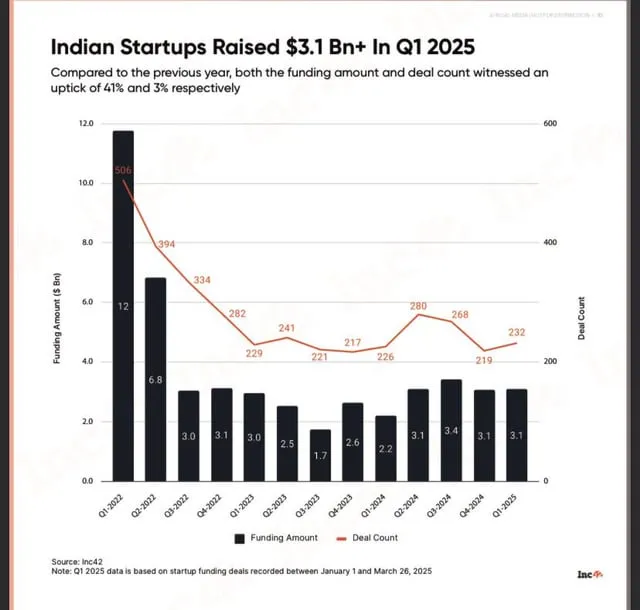
Sarvam BharatGPT 2.0 leads Hindi benchmarks and its forty one million dollar Series A is fueling a big push into voice first edtech.
Krutrim backed by Ola ships low cost Indic LLMs for agriculture and early pilots report crop gains near twenty percent.
From the AWS 2025 Accelerator, standouts include Hyperbots for agents, Smallest AI for ultra efficient edge models, and Stimuler for creative generation, each receiving about one million dollars.
QpiAI and Qure.ai dominate health use cases with reported radiology accuracy around ninety five percent. CropIn has reached about one million farmers.
Gnani.ai provides voice AI to fifty banks. Hanu is tuning models for Devanagari and other Indic scripts.
Policy is lining up. The government’s AI Mission of INR 10,000 crore rupees is funding new data centers, and CII’s Innoverge is pushing the Make in India message.
Against the global titans there are real constraints. Chip export curbs slow training cycles. The upside is growing fintech partnerships such as SC Ventures that could set up a breakout over the next two to three years.
Cracking Nvidia’s Moat
Nvidia’s trillion dollar story runs on two engines: CUDA’s software lock-in and Blackwell B200’s HBM3e horsepower. The moat is real, but not bulletproof. If you ask who actually has the nerve to challenge it, here is the field and the realistic path.
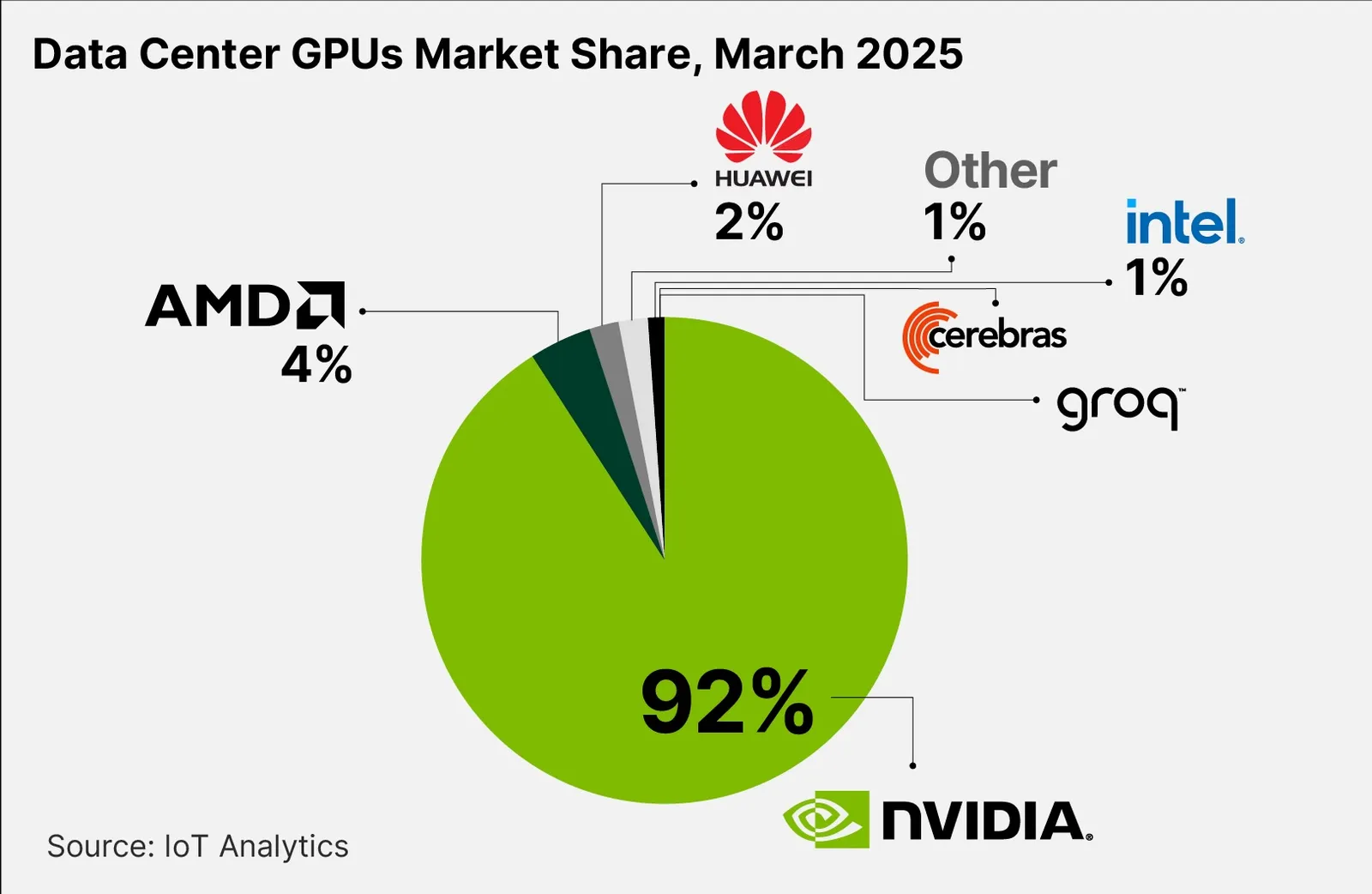
I feel there are only 3 real challengers today
MI350X lands in the second half of 2025. Target is about one and a half times H100 inference at roughly twenty percent lower cost. Microsoft Azure has a reported ten-billion dollar commitment. ROCm keeps closing the gap with CUDA and the open-source tilt could flip developer mindshare. If MI450 shows up in 2026 with a clean perf-per-watt jump, the trillion-dollar dream stays alive.
Intel (INTC)
Gaudi3 trains about thirty percent faster than H100 on select workloads, and in-house fabs mean steadier supply. Q3 revenue sits near fourteen billion dollars, up about eight percent, with AI at roughly fifteen percent of the mix. Falcon Shores is the big 2026 swing. The unlock is software ease so pilots turn into fleet-wide rollouts.
Huawei
Ascend 910C with Atlas systems is approaching H100 parity on several domestic benchmarks. Q2 AI revenue is around fifteen billion dollars, up about fifty percent year over year. The CANN software stack still trails CUDA and ROCm in breadth, and fabrication ceilings plus geopolitics cap how far they can push globally through 2028. Inside China, scale looks very real; outside, the runway is narrower.
Beyond the Hype Cycle
AI in plain English.
You have three layers. Big base models like GPT. Everyday apps like chatbots and computer vision. The plumbing underneath like chips and cloud and power.
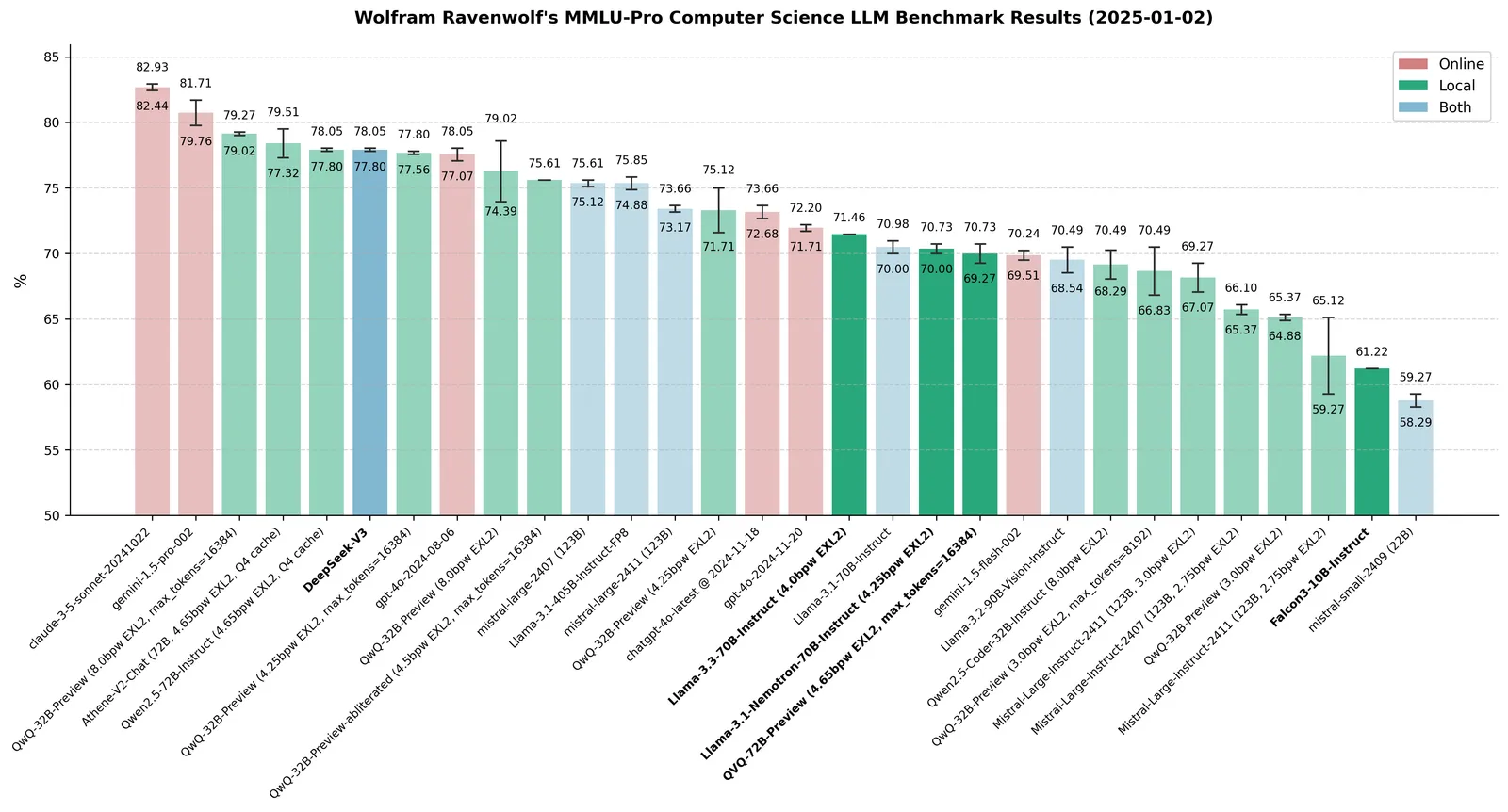
A lot of local models have become really good, this is where consulting companies can come and execute this on behalf of their client
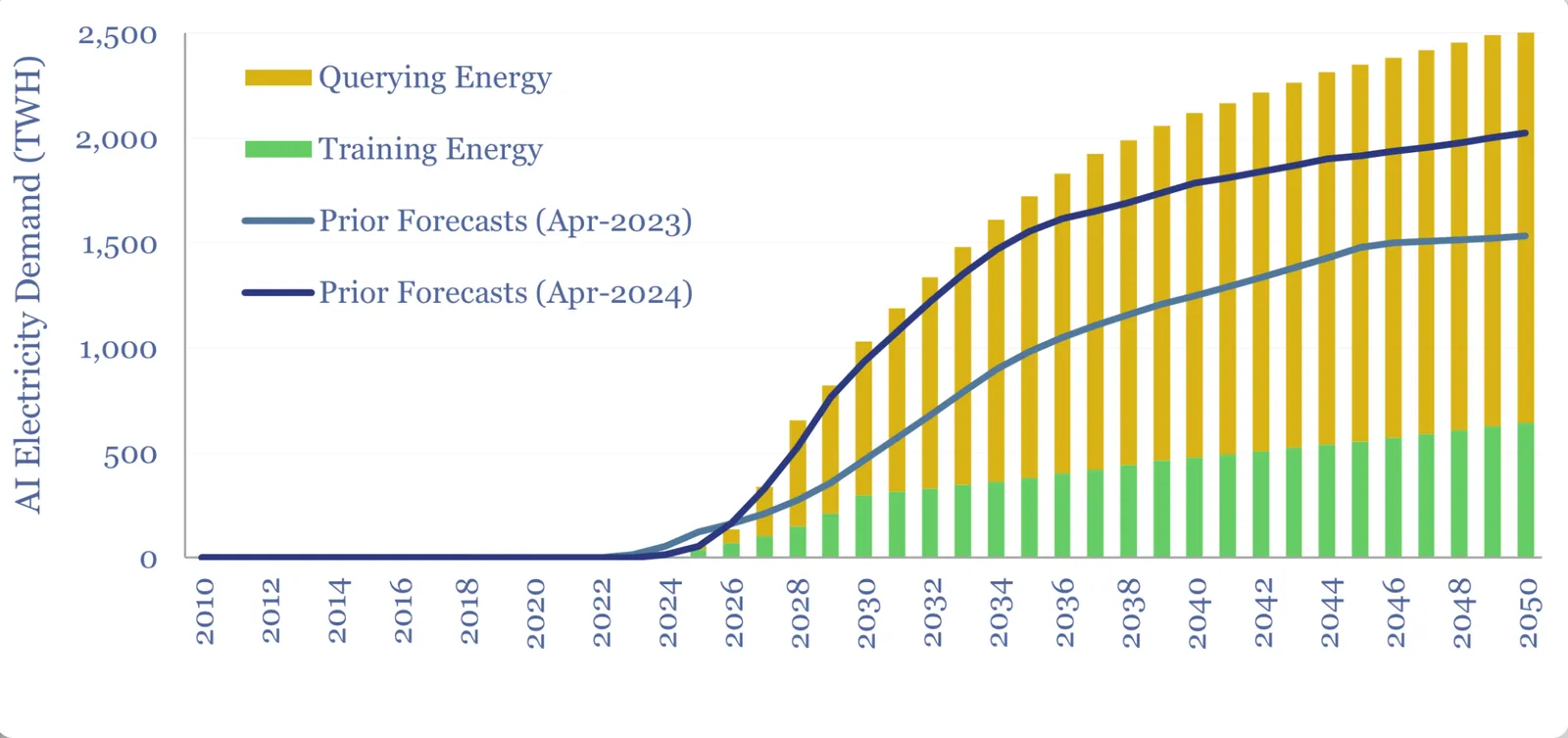
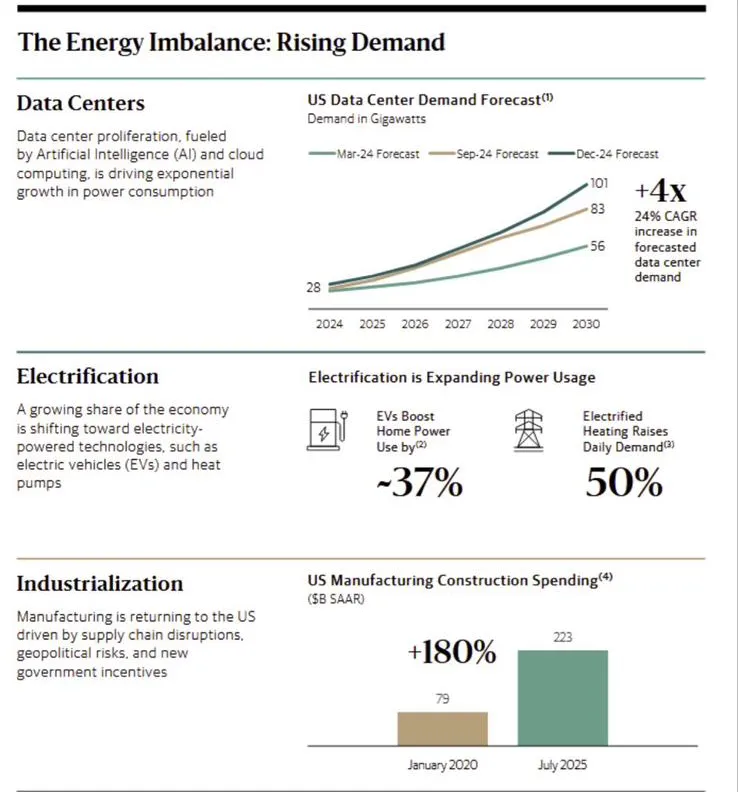
As all this models train and learn more the energy demand is going to go through roof
We need to find winners in shovel providers
Currently we are long several of the names published above
Disclaimer
The views expressed in this article are for informational and educational purposes only and do not constitute financial, investment, or other professional advice. While every effort has been made to ensure accuracy, no guarantee is provided for the completeness or reliability of the information. Readers should do their own due diligence before making any investment decisions.
The author currently owns shares of AMD, BAIDU, BABA, IREN and others. This disclosure is made in the interest of full transparency and should not be construed as a recommendation to buy, sell, or hold any securities.
You can watch live flows here