Cheap for a reason?
First disclosure - I am long on Ambika Cotton Mills and sitting on a decent paper loss. As the market cap of the company has nearly halved from its peak in Jan 2018
If someone looks at the company today it will look optically cheap
- 7 times earnings - 75% of book value - 50% of Annual Sales
with decent first level economics
- Mid teen ROCE - Sales CAGR / Profit of ~10% for the last few years - Now No long term debt with a continuous reduction in the last 10 years - Knowledgeable and experienced promoter - Selling a product out of commodity (Cotton) and still holding margins
Even the Credit agencies have a good opinion see the extract from the latest one
Highlights in bold mine
ACML enjoys strong pricing flexibility, aided by its premium positioning in the cotton yarn market and its adequate captive power facilities. This had resulted in stable operating margin at 17.7-19.6%, over the four years through fiscal 2019.Going forward, continued focus on operating efficiency to result in strong operating margin of 19.5 percent and cash accrual of around Rs.100 crore. ACML continues to have a robust financial risk profile; total outside liability to tangible net worth (TOLTNW) is expected to be at 0.4 time over the medium term. Despite management plans to add spindle capacity, the capital structure to remain healthy as it is expected to be funded by internal accruals. Additionally, healthy profitability and prudent working capital management should support the key financial metrics over the medium term
And a cursory look at Annual reports would tell some of the best minds in value investing are invested over the long term
-VALUEQUEST INDIA MOAT FUND LIMITED -CATAMARAN ADVISORS LLP
So why is Mr. Market pricing Ambika pricing so cheap?
Here is my version of the story
A. The cash generation has slowed down and the market has got a whiff of it
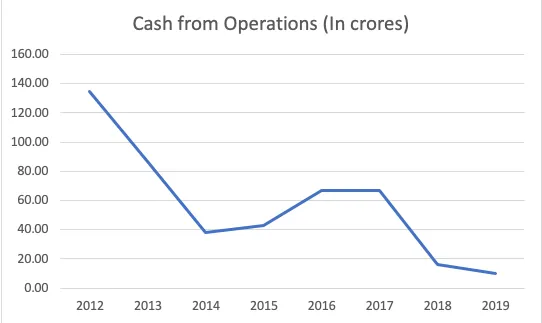
Current and prospective investors have to assess if the phenomenon is temporary or permanent
B. Ambika cotton mills as rightly pointed by Crisil has strong pricing flexibility but limited or no pricing power over customers
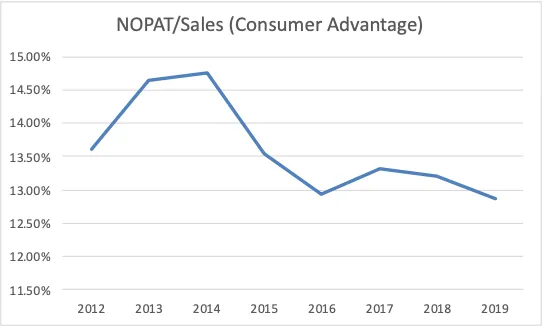
C. While the ROIC is steady ~15% the incremental ROIC has drastically reduced in the last two reported fiscals
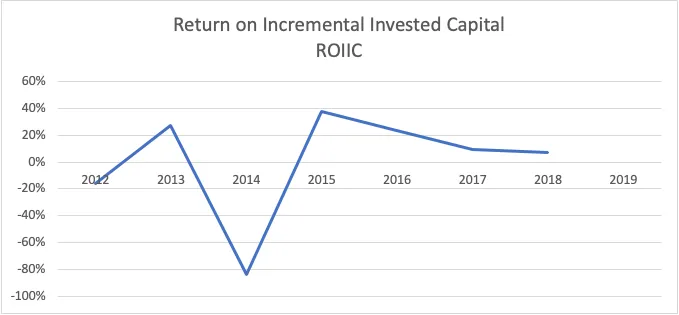
In my past experience, I have seen that when companies deleverage some of the incremental returns that leverage gives goes away when they become debt-free. We need to monitor this trend as existing investors
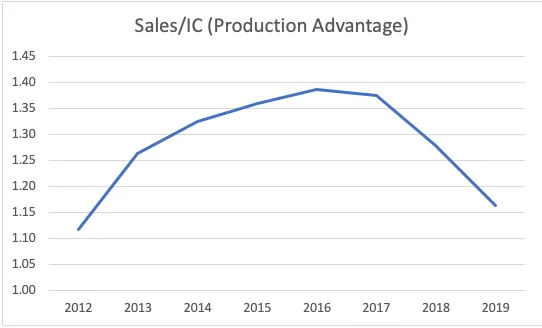
D. Fixed assets are sweating so well between 2012 and 2019 the gross block of fixed assets has reduced by 20% but the top line has increased by 70% WoW! However, using a different lens the Sales / Invested Capital has declined indicating some sluggishness in operations
E. When I took position it was in the wealth maximization quadrant of Earnings Power Box (link now broken), But it has gradually receded
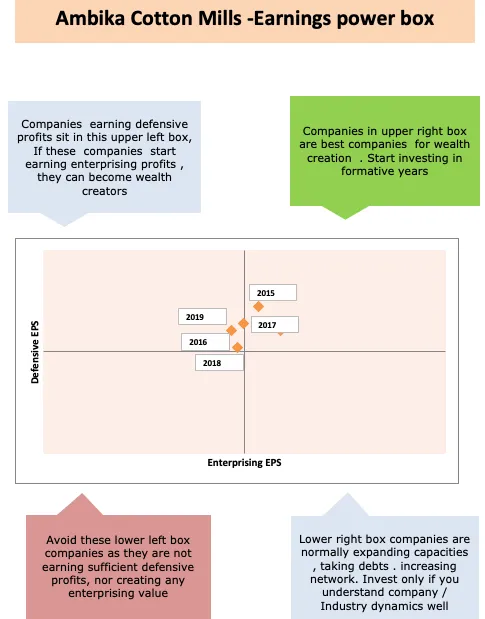
The company is expanding capacity as stated with the addition of 30,000 spindles this is funded from accruals and should support topline growth.
However, as investors, unless the company improves on above 5 parameters or takes the pain of communicating to shareholders, Sorry not all of us can attend AGM. The company would find it difficult to sell over its last 5 years Median PE (10) in the near term.
I am though happy with my dividends keep them coming !